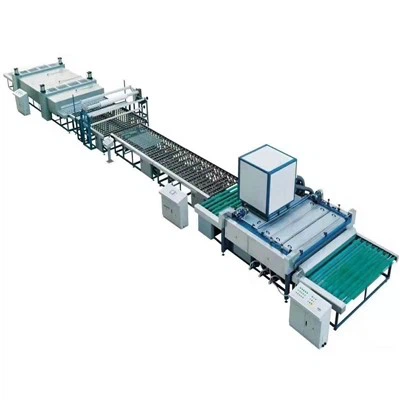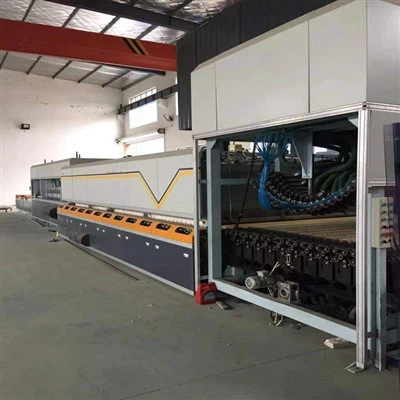
Hey there! As a supplier of Glass Strengthening Furnaces, I've seen firsthand how furnace design can have a huge impact on glass strengthening quality. In this blog, I'm gonna break down the key aspects of furnace design and explain how they affect the end result of glass strengthening.
Temperature Control
One of the most critical factors in glass strengthening is temperature control. The furnace needs to heat the glass to a specific temperature range and maintain it evenly across the entire surface. If the temperature is too low, the glass won't strengthen properly. On the other hand, if it's too high, the glass might warp or even break.
Modern furnaces, like our Chemical Glass Tempering Furnace, are equipped with advanced temperature control systems. These systems use sensors to constantly monitor the temperature inside the furnace and adjust the heating elements accordingly. This ensures that the glass is heated to the exact temperature required for optimal strengthening.
The design of the heating elements also plays a crucial role. In some furnaces, the heating elements are placed in a way that creates hot spots, which can lead to uneven heating. Our furnaces are designed with a uniform heating element layout to distribute heat evenly. This helps in achieving consistent glass quality throughout the batch.
Airflow and Cooling
After the glass is heated, it needs to be cooled rapidly and evenly. This is where the airflow and cooling design of the furnace come into play. The cooling process is what creates the compressive stress on the surface of the glass, which is responsible for its strength.
A well - designed furnace, such as our Convection Flat Glass Tempering Furnace, has a precise airflow system. The air nozzles are carefully positioned to direct a high - velocity stream of cool air onto the glass. This rapid cooling sets the surface of the glass while the interior remains hot, creating the desired stress pattern.
If the airflow is not uniform, some parts of the glass might cool faster than others. This can result in uneven stress distribution, leading to glass that is more prone to breakage. Our furnaces are engineered to provide a consistent and balanced airflow across the entire glass surface, ensuring high - quality strengthening.
Furnace Size and Capacity
The size and capacity of the furnace also affect glass strengthening quality. A small furnace, like our Small Glass Tempering Furnace, might be ideal for small - scale production or for testing new glass designs. However, it has limitations when it comes to handling large pieces of glass.
Larger furnaces can accommodate bigger glass sheets, but they need to be designed to maintain uniform temperature and airflow across the larger area. If the furnace is too big and not properly designed, the edges of the glass might cool or heat differently compared to the center. This can lead to quality issues, such as bowing or uneven strength.
When choosing a furnace, it's important to consider the size of the glass you'll be working with. Our team can help you select the right furnace size based on your production needs to ensure the best possible glass strengthening quality.
Material and Construction
The materials used in the construction of the furnace can impact its performance and, in turn, the glass strengthening quality. The insulation material is particularly important. A furnace with good insulation will retain heat better, reducing energy consumption and ensuring a more stable temperature inside the furnace.
The interior lining of the furnace also matters. It should be made of a material that can withstand high temperatures and resist corrosion. Our furnaces are built with high - quality insulation and interior linings to ensure long - term reliability and consistent performance.
Automation and Control Systems
In today's world, automation is key to achieving high - quality glass strengthening. Modern furnaces are equipped with advanced control systems that allow for precise control of all the parameters, such as temperature, airflow, and cooling time.
These control systems can be programmed to follow specific recipes for different types of glass. This means that you can get consistent results every time you run a batch. For example, if you're working with a particular type of tempered glass for a specific application, you can set up the furnace to use the exact settings required for that glass.
Our furnaces come with user - friendly control panels that make it easy for operators to monitor and adjust the settings. This reduces the chances of human error and ensures that the glass is strengthened to the highest quality standards.
Impact on Different Types of Glass
The design of the furnace can have different effects on various types of glass. For example, laminated glass requires a different heating and cooling process compared to single - pane glass. Our furnaces are designed to be versatile and can be adjusted to handle different types of glass.
When it comes to thin glass, the furnace design needs to be even more precise. Thin glass is more prone to breakage during the strengthening process, so the temperature and cooling rates need to be carefully controlled. Our furnaces are capable of handling thin glass with high precision, ensuring that it is strengthened without cracking or warping.
Conclusion
As you can see, the design of the glass strengthening furnace has a profound impact on the quality of the strengthened glass. From temperature control to airflow, size, materials, and automation, every aspect of the furnace design matters.
If you're in the market for a glass strengthening furnace and want to ensure the highest quality of your glass products, we're here to help. Our team of experts can guide you through the selection process and provide you with a furnace that meets your specific needs. Whether you're a small - scale producer or a large - scale manufacturer, we have the right solution for you.
Don't hesitate to reach out to us to discuss your requirements and start a procurement negotiation. We're committed to providing you with the best - in - class glass strengthening furnaces and excellent customer service.


References
- Glass Technology Handbook, various editions
- Industry reports on glass manufacturing and furnace technology