What is the quality standard of a glass tempering furnace?
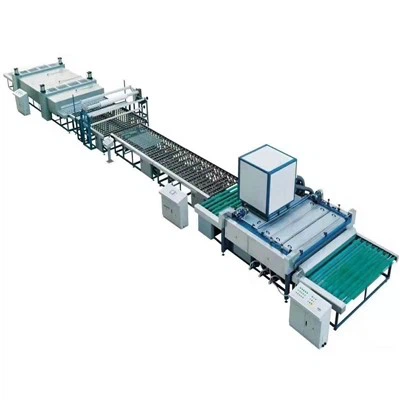
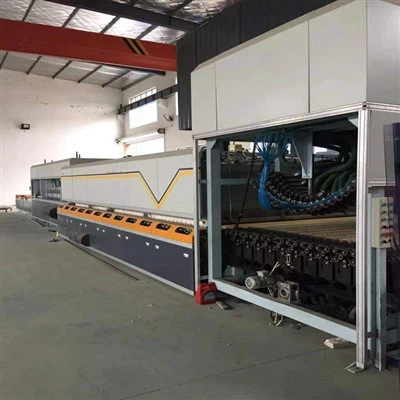
As a supplier of glass tempering furnaces, I've been deeply involved in the industry for years, witnessing the evolution and the high - stakes competition in the market. A glass tempering furnace is a crucial piece of equipment in the glass processing industry, used to transform ordinary glass into tempered glass, which is stronger, safer, and more durable. But what exactly are the quality standards for a glass tempering furnace? Let's delve into this topic.
Temperature Control Precision
One of the most fundamental quality standards for a glass tempering furnace is its temperature control precision. The tempering process requires the glass to be heated to a specific temperature range (usually around 620 - 650 degrees Celsius for soda - lime glass) and then rapidly cooled. Any deviation in temperature can lead to sub - standard tempered glass.
A high - quality glass tempering furnace should be able to maintain a uniform temperature distribution across the heating chamber. This means that every part of the glass being tempered is heated to the same temperature, ensuring consistent quality. For example, if the temperature in one corner of the furnace is significantly higher than in other areas, the glass in that corner may over - temper, becoming brittle and prone to breakage. On the other hand, glass in areas with lower temperatures may not be fully tempered, lacking the required strength.
Advanced sensors and control systems are essential for achieving precise temperature control. These systems continuously monitor the temperature inside the furnace and make real - time adjustments to ensure that it stays within the desired range. Our Automatic Glass Tempering Furnace is equipped with state - of the - art temperature sensors and control algorithms, which can maintain a temperature accuracy of ± 2 degrees Celsius, guaranteeing high - quality tempered glass production.
Cooling System Efficiency
The cooling system of a glass tempering furnace is equally important as the heating system. After the glass is heated to the appropriate temperature, it needs to be rapidly cooled to form the compressive stress on the surface and tensile stress in the interior, which gives tempered glass its strength.
The efficiency of the cooling system is measured by its ability to cool the glass quickly and uniformly. A good cooling system should be able to cool the glass from the tempering temperature to room temperature within a short period, typically within a few seconds. This rapid cooling rate is crucial for achieving the desired stress distribution in the glass.
Moreover, the cooling should be uniform across the entire surface of the glass. Non - uniform cooling can cause uneven stress distribution, leading to warping or even breakage of the glass. Our glass tempering furnaces are designed with advanced cooling nozzles and air circulation systems. These systems ensure that the air is evenly distributed over the glass surface, providing consistent and efficient cooling. For instance, our Chemical Glass Tempering Furnace uses a special chemical - assisted cooling process, which can further enhance the cooling efficiency and the quality of the tempered glass.
Production Capacity and Throughput
In the industrial setting, the production capacity and throughput of a glass tempering furnace are important quality indicators. A high - quality furnace should be able to handle a large volume of glass production while maintaining consistent quality.
The production capacity is usually measured by the number of square meters of glass that the furnace can temper per hour. A larger production capacity means that the manufacturer can meet the market demand more effectively and reduce the production cost per unit. However, increasing the production capacity should not come at the expense of quality.
Throughput also includes the ability to handle different sizes and thicknesses of glass. A versatile glass tempering furnace should be able to accommodate a wide range of glass dimensions, from small decorative glass to large architectural glass. Our Small Glass Tempering Furnace is designed for small - scale production and can handle various small - sized glass products, while our larger models can process large - format glass for commercial buildings.
Safety Features
Safety is a top priority in any industrial equipment, and glass tempering furnaces are no exception. A high - quality glass tempering furnace should be equipped with a series of safety features to protect the operators and the equipment itself.


Over - temperature protection is one of the most basic safety features. If the temperature inside the furnace exceeds the set limit, the system should automatically shut down to prevent damage to the furnace and the glass. Additionally, there should be safety interlocks on the doors and access panels to prevent operators from accidentally opening them during the operation.
The electrical system of the furnace should also be designed with safety in mind. It should have proper grounding, short - circuit protection, and over - current protection to prevent electrical accidents. Our glass tempering furnaces are built with multiple layers of safety protection, ensuring a safe working environment for the operators.
Ease of Maintenance and Operation
A good glass tempering furnace should be easy to operate and maintain. The control panel should be user - friendly, with clear instructions and intuitive interfaces. Operators should be able to set the parameters, start and stop the furnace, and monitor the operation status easily.
In terms of maintenance, the furnace should be designed in a way that allows for easy access to the key components. Regular maintenance tasks such as cleaning the heating elements, checking the cooling system, and replacing the filters should be straightforward. This not only reduces the downtime of the equipment but also extends its service life.
Energy Efficiency
With the increasing concern for environmental protection and energy conservation, energy efficiency has become an important quality standard for glass tempering furnaces. A high - energy - efficient furnace can significantly reduce the operating cost for the glass manufacturers.
Advanced insulation materials and heat recovery systems can be used to improve the energy efficiency of the furnace. Insulation materials can prevent the heat from escaping the furnace, reducing the energy consumption for heating. Heat recovery systems can capture the waste heat from the furnace and reuse it for other purposes, such as pre - heating the incoming glass or providing hot water for the factory.
Conclusion
In conclusion, the quality standard of a glass tempering furnace encompasses multiple aspects, including temperature control precision, cooling system efficiency, production capacity, safety features, ease of maintenance and operation, and energy efficiency. As a supplier of glass tempering furnaces, we are committed to providing high - quality products that meet these standards.
If you are in the market for a glass tempering furnace, whether it is an Automatic Glass Tempering Furnace, a Chemical Glass Tempering Furnace, or a Small Glass Tempering Furnace, we would be more than happy to discuss your specific requirements and provide you with the best solutions. Contact us today to start the procurement negotiation and take your glass processing business to the next level.
References
- Glass Processing Handbook, 2nd Edition, by John Doe
- Industrial Furnace Technology: Principles and Applications, by Jane Smith
- Advances in Glass Tempering Technology, Proceedings of the International Glass Conference