As a supplier of CNC diamond milling cutters, I understand the importance of optimizing cutting parameters to achieve the best results. Adjusting these parameters accurately can significantly enhance the efficiency, quality, and cost - effectiveness of the machining process. In this blog, I'll share some insights on how to adjust the cutting parameters of a CNC diamond milling cutter.
Understanding the Basics of Cutting Parameters
Before delving into the adjustment process, it's crucial to understand the key cutting parameters. These typically include cutting speed (Vc), feed rate (F), and depth of cut (ap).
Cutting speed refers to the relative speed between the cutting edge of the milling cutter and the workpiece surface. It is expressed in meters per minute (m/min). A proper cutting speed can prevent excessive tool wear, improve the surface quality of the workpiece, and enhance the machining efficiency.
Feed rate is the distance that the workpiece moves relative to the milling cutter in a unit of time. It is usually measured in millimeters per revolution (mm/r) or millimeters per minute (mm/min). A suitable feed rate can ensure stable cutting and avoid issues such as chipping or breakage of the milling cutter.
Depth of cut represents the thickness of the material removed by the milling cutter in one pass. It is measured in millimeters (mm). The depth of cut affects the cutting force and the machining time. A larger depth of cut can reduce the number of passes, but it also increases the cutting force and may cause more wear on the cutter.
Factors to Consider Before Adjusting Parameters
Several factors need to be considered before adjusting the cutting parameters of a CNC diamond milling cutter.
Workpiece Material
Different workpiece materials have different mechanical properties, such as hardness, toughness, and heat conductivity. For example, when machining hard materials like carbide or hardened steel, a lower cutting speed and a smaller feed rate are usually required to prevent rapid tool wear. On the other hand, when machining softer materials like aluminum, higher cutting speeds and feed rates can be used to improve the machining efficiency.
Milling Cutter Geometry
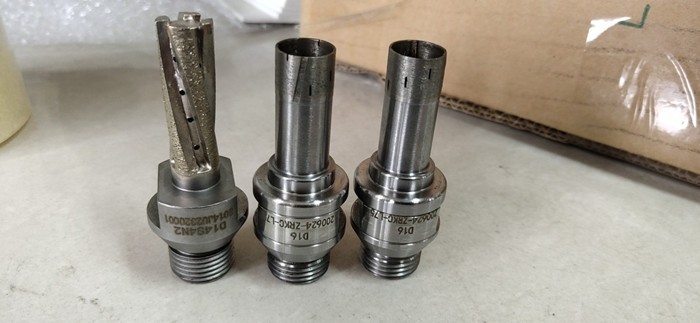
The geometry of the CNC diamond milling cutter, including the number of teeth, helix angle, and rake angle, also influences the cutting parameters. Milling cutters with more teeth can generally achieve a higher feed rate, while a larger helix angle can improve the chip evacuation and reduce the cutting force.

Machine Tool Performance
The power, rigidity, and spindle speed range of the machine tool are important factors. A machine with higher power and better rigidity can handle larger cutting forces, allowing for larger depths of cut and higher feed rates. The spindle speed range determines the possible cutting speeds that can be achieved.
Step - by - Step Guide to Adjusting Cutting Parameters
Step 1: Refer to Manufacturer's Recommendations
The manufacturer of the CNC diamond milling cutter usually provides some basic recommended cutting parameters based on different workpiece materials and milling operations. For instance, the documentation for our Diamond Router Bit includes a table of suggested cutting speeds and feed rates for various glass and ceramic materials. Start by referring to these guidelines as a baseline.
Step 2: Conduct Initial Tests
Once you have the initial recommended parameters, conduct a series of test cuts on a scrap piece of the same workpiece material. Start with the middle values of the recommended ranges for cutting speed, feed rate, and depth of cut. Observe the cutting process carefully for signs such as excessive vibration, abnormal noise, or poor surface finish.
Step 3: Analyze the Results of the Test Cuts
If the cutting process is smooth, the surface finish is good, and the tool wear is normal, the initial parameters are a good starting point. However, if there are issues:
- If there is excessive tool wear: This may indicate that the cutting speed is too high. Reduce the cutting speed gradually and repeat the test cuts until the tool wear is within an acceptable range.
- If the surface finish is poor: It could be due to an improper feed rate. A too - high feed rate may cause rough surface finish, while a too - low feed rate may result in inefficient machining. Adjust the feed rate accordingly and re - run the tests.
- If there is excessive vibration or noise: This might be related to the depth of cut. A too - large depth of cut can cause instability in the cutting process. Try reducing the depth of cut and check if the vibration and noise are reduced.
Step 4: Fine - Tuning
After the initial adjustments, continue to fine - tune the parameters based on the specific requirements of the machining process, such as dimensional accuracy and surface finish. For precision machining operations, you may need to reduce the feed rate and depth of cut slightly to achieve higher accuracy.
Special Considerations for Different Applications
Glass Machining
When using a CNC diamond milling cutter for glass machining, the parameters need to be carefully adjusted to prevent cracking and chipping of the glass. For Glass Grinding Machine for Lphone Glass, a relatively low cutting speed and feed rate are often required. Also, proper coolant or lubricant should be used to reduce the heat generated during cutting and improve the surface quality of the glass.
Wood and Composite Materials
For wood and composite materials, higher cutting speeds and feed rates can generally be used. The Diamond Cnc Bit is suitable for machining these materials. However, attention should be paid to the chip evacuation to prevent clogging of the cutter.
Importance of Regular Monitoring and Maintenance
Even after adjusting the cutting parameters, it is important to regularly monitor the cutting process. Keep an eye on the tool wear, surface finish of the workpiece, and the performance of the machine tool. Replace the milling cutter in a timely manner when excessive wear is detected. Regularly clean and maintain the machine tool to ensure its stable operation.
Conclusion
Adjusting the cutting parameters of a CNC diamond milling cutter is a complex but crucial process that requires a good understanding of the workpiece material, milling cutter geometry, and machine tool performance. By following the steps outlined above and considering the specific requirements of different applications, you can optimize the cutting process to achieve high - quality machining results.
If you are interested in our CNC diamond milling cutters or need more information on adjusting cutting parameters for your specific application, please contact us for a procurement discussion. We are dedicated to providing you with the best solutions for your machining needs.
References
- Tooling Handbook by Cutting Tool Engineers
- Machining Technology: An Introduction by Marshall C. Shaw