In the world of precision machining, CNC diamond milling cutters are essential tools, especially in industries such as glass processing. As a seasoned supplier of CNC diamond milling cutters, I understand the critical role that optimizing the cutting path plays in improving machining efficiency, reducing tool wear, and enhancing the quality of the finished product. In this blog post, I will share some practical tips on how to optimize the cutting path for a CNC diamond milling cutter.


Understanding the Basics of Cutting Path Optimization
The cutting path refers to the trajectory that the CNC diamond milling cutter follows during the machining process. Optimizing this path involves finding the most efficient and effective way to move the cutter across the workpiece to achieve the desired shape and finish. This process requires a balance between various factors, including machining time, tool life, and the quality of the finished surface.
One of the primary goals of cutting path optimization is to minimize the non - cutting time. Non - cutting time includes the time spent on tool rapid movements, retractions, and positioning. By reducing this time, we can significantly increase the overall machining efficiency. Another important aspect is to ensure that the cutter experiences a consistent and appropriate load throughout the cutting process. This helps to extend the tool life and improve the surface finish of the workpiece.
Factors Affecting the Cutting Path
Workpiece Material and Geometry
Different workpiece materials have different properties, such as hardness, toughness, and brittleness. For example, when machining glass with a Diamond Milling Cutter for Bottero CNC, the cutter needs to be carefully controlled to avoid chipping or cracking. The geometry of the workpiece also plays a crucial role. Complex shapes may require more intricate cutting paths to ensure accurate machining.
Tool Characteristics
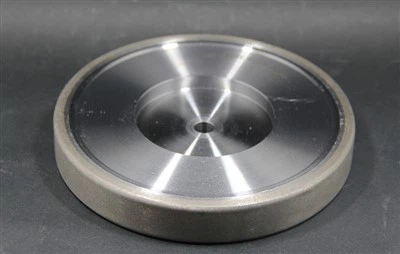
The design and specifications of the CNC diamond milling cutter, such as the number of flutes, cutter diameter, and edge geometry, have a direct impact on the cutting path. A cutter with more flutes may be able to remove material faster but may also require a more conservative cutting path to prevent overloading.
Machining Parameters
Parameters such as cutting speed, feed rate, and depth of cut are closely related to the cutting path. For instance, a higher feed rate may require a more stable cutting path to maintain the quality of the cut. These parameters need to be adjusted in conjunction with the cutting path optimization to achieve the best results.
Practical Tips for Cutting Path Optimization
Simplify the Path Design
Complex cutting paths can increase the machining time and make it more difficult to control the cutter. Try to simplify the path by using straight lines and arcs as much as possible. For example, when milling a circular shape, use a circular interpolation path instead of a series of small straight - line segments. This not only reduces the programming complexity but also improves the cutting efficiency.
Use High - Speed Machining Strategies
High - speed machining strategies can significantly reduce the machining time. One such strategy is trochoidal milling, which uses a circular motion to follow the cutting path. Trochoidal milling distributes the cutting load evenly along the cutter edge, reducing the risk of tool breakage and improving the surface finish. It also allows for a higher feed rate and cutting speed, resulting in faster material removal.
Minimize Tool Retractions
Tool retractions add to the non - cutting time and can cause uneven cuts on the workpiece. Whenever possible, try to keep the cutter in contact with the workpiece during the machining process. This can be achieved by using techniques such as plunge milling or helical interpolation for entry and exit points, rather than retracting the tool completely.
Optimal Tool Engagement
Maintaining an optimal tool engagement is crucial for both tool life and machining quality. The tool should be engaged with the workpiece at an appropriate angle and depth. For example, when using a Thread Shank Glass Diamond Drill Bit for glass drilling, the drill should enter the material at a proper angle to avoid chipping. Using simulation software can help you visualize the tool engagement and make adjustments to the cutting path accordingly.
Leveraging CAD/CAM Software
CAD/CAM software is an indispensable tool for cutting path optimization. These software packages allow you to create detailed 3D models of the workpiece and generate optimized cutting paths automatically. You can also simulate the machining process to visualize the cutter movement, check for collisions, and analyze the cutting forces.
Most CAD/CAM software offers a range of cutting strategies, such as roughing, finishing, and contouring. By selecting the appropriate strategy for your project, you can ensure that the cutting path is optimized for both efficiency and quality. Additionally, the software can generate accurate G - code, which is used to control the CNC machine.
Case Study: Glass Machining
Let's take a look at a real - world example of cutting path optimization in glass machining. In a glass manufacturing plant, they were using Diamond Core Drill for Glass to drill holes in large glass panels. The initial cutting path was a simple straight - line drill pattern, which resulted in long machining times and frequent tool breakage.
After analyzing the situation, the engineers decided to adopt a helical drilling path. This path allowed the drill bit to gradually penetrate the glass, reducing the impact force and preventing chipping. They also optimized the feed rate and cutting speed based on the properties of the glass and the drill bit. As a result, the machining time was reduced by 30%, and the tool life was extended by 50%.
Conclusion
Optimizing the cutting path for a CNC diamond milling cutter is a complex but essential process. By understanding the factors that affect the cutting path, implementing practical optimization tips, and leveraging the power of CAD/CAM software, you can significantly improve the efficiency and quality of your machining operations.
If you are interested in our high - quality CNC diamond milling cutters or need more information on cutting path optimization, we are here to help. Whether you are a small - scale workshop or a large - scale manufacturing plant, our team of experts can provide you with customized solutions to meet your specific needs. Feel free to reach out to us for more details and to start a procurement discussion. We look forward to working with you to enhance your machining capabilities.
References
- Kalpakjian, S., & Schmid, S. R. (2006). Manufacturing Engineering and Technology. Pearson Prentice Hall.
- Shaw, M. C. (2005). Metal Cutting Principles. Oxford University Press.
- Dornfeld, D. A., Min, S., & Takeuchi, Y. (2008). Handbook of Machining with Grinding Wheels. CRC Press.