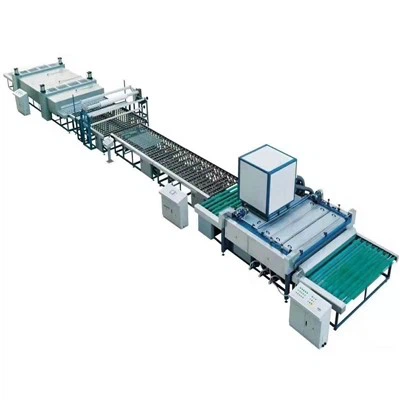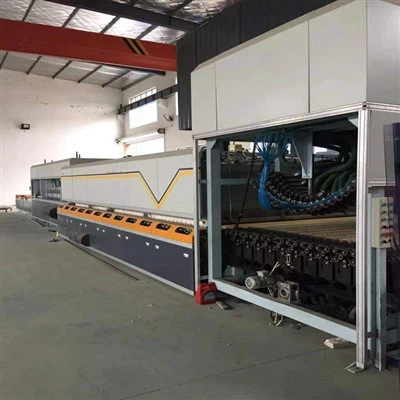
Solar energy is rapidly becoming a dominant force in the global push towards sustainable energy solutions. At the heart of many solar energy systems lies solar glass, a key component that plays a crucial role in capturing and converting sunlight into electricity. As a leading supplier of Solar Glass Tempering Furnaces, we often encounter a common question from our customers: Can a solar glass tempering furnace temper curved solar glass? In this blog post, we will delve into this topic, exploring the technical aspects, challenges, and possibilities associated with tempering curved solar glass.
Understanding Solar Glass Tempering
Before we address the question of tempering curved solar glass, it's essential to understand the basics of solar glass tempering. Tempering is a heat treatment process that enhances the strength and durability of glass. By heating the glass to a high temperature and then rapidly cooling it, the surface of the glass is compressed while the interior remains in tension. This creates a balanced stress distribution within the glass, making it more resistant to breakage and impact.
There are different types of solar glass tempering furnaces available in the market, each with its own set of features and capabilities. For instance, our Chemical Glass Tempering Furnace uses a chemical process to strengthen the glass, which is particularly suitable for thin and delicate glass. On the other hand, our Convection Flat Glass Tempering Furnace utilizes convection heating to ensure uniform temperature distribution across the glass surface, resulting in high-quality tempered flat glass. And our Automatic Glass Tempering Furnace offers automated operation, increasing efficiency and reducing labor costs.
The Challenge of Tempering Curved Solar Glass
Tempering curved solar glass presents unique challenges compared to tempering flat glass. One of the primary challenges is achieving uniform heating and cooling across the curved surface. Unlike flat glass, which has a consistent distance from the heating elements in the furnace, curved glass has varying distances at different points along its surface. This can lead to uneven heating, resulting in inconsistent tempering and potential defects in the glass.
Another challenge is maintaining the shape of the curved glass during the tempering process. The rapid heating and cooling can cause the glass to deform or lose its desired curvature if not properly controlled. Special fixtures and support systems are required to hold the glass in place and ensure that it retains its shape throughout the tempering process.
Can a Solar Glass Tempering Furnace Temper Curved Solar Glass?
The answer is yes, but it depends on the design and capabilities of the tempering furnace. Modern solar glass tempering furnaces are equipped with advanced technologies and features that enable them to temper curved solar glass effectively.
One such technology is the use of adjustable heating elements. These elements can be programmed to provide different levels of heat at different points along the curved surface of the glass, ensuring uniform heating. Additionally, some furnaces are equipped with advanced sensors and control systems that monitor the temperature and stress distribution in the glass in real-time, allowing for precise adjustments during the tempering process.
Another important factor is the design of the cooling system. A well-designed cooling system can ensure that the glass is cooled rapidly and uniformly, preventing deformation and ensuring consistent tempering. Some furnaces use a combination of air and water cooling to achieve optimal results.
Our Solutions for Tempering Curved Solar Glass
As a leading supplier of Solar Glass Tempering Furnaces, we have developed innovative solutions to address the challenges of tempering curved solar glass. Our furnaces are designed with adjustable heating elements and advanced control systems that allow for precise temperature control across the curved surface of the glass. This ensures uniform heating and consistent tempering, resulting in high-quality curved solar glass.
In addition, we offer custom-designed fixtures and support systems that are specifically tailored to the shape and size of the curved glass. These fixtures hold the glass in place during the tempering process, preventing deformation and ensuring that the glass retains its desired curvature.


Benefits of Using Tempered Curved Solar Glass
Tempered curved solar glass offers several benefits over non-tempered or flat glass. Firstly, it is more durable and resistant to breakage, making it ideal for use in harsh environments or applications where the glass may be subject to impact or stress. Secondly, the curved shape of the glass can improve the efficiency of solar energy collection by allowing for better light capture and reflection. This can result in increased power output from solar panels, making them more cost-effective in the long run.
Conclusion
In conclusion, a solar glass tempering furnace can temper curved solar glass, provided that it is equipped with the right technologies and features. At our company, we are committed to providing our customers with the highest quality tempering solutions for both flat and curved solar glass. Our innovative furnaces and custom-designed fixtures ensure that we can meet the unique needs of our customers and deliver high-quality tempered glass that meets the strictest industry standards.
If you are interested in learning more about our Solar Glass Tempering Furnaces or have any questions about tempering curved solar glass, we encourage you to contact us. Our team of experts is ready to assist you and provide you with the information and support you need to make an informed decision. Whether you are a small-scale solar panel manufacturer or a large energy company, we have the solutions to meet your needs.
References
- ASTM International. (2023). Standard Specification for Heat-Treated Flat Glass - Kind HS, Kind FT. ASTM C1048 - 23.
- International Electrotechnical Commission. (2022). Photovoltaic (PV) modules - Design qualification and type approval. IEC 61215 - 1:2021.