Can a PU timing belt be used in a system with frequent start - stop operations?
Hey there! I'm a supplier of PU timing belts, and I often get asked this question: Can a PU timing belt be used in a system with frequent start - stop operations? Well, let's dive right in and find out.
First off, let's talk a bit about what a PU timing belt is. Polyurethane (PU) timing belts are known for their durability, flexibility, and high - precision power transmission. They're made of a polyurethane body with embedded steel or fiberglass cords. These cords give the belt its strength, while the polyurethane provides resistance to wear, oil, and chemicals.
Now, when it comes to systems with frequent start - stop operations, there are a few factors we need to consider. One of the main concerns is the stress that these operations put on the belt. Every time the system starts, there's an initial jolt of force as the belt has to get the load moving. And when it stops, there's a sudden deceleration. This repeated cycle of acceleration and deceleration can cause a lot of stress on the belt.
But here's the good news. PU timing belts are actually quite well - suited for these types of applications. The flexibility of the polyurethane material allows it to absorb some of the shock from the start - stop cycles. The embedded cords also help distribute the stress evenly across the belt, reducing the risk of premature failure.
Another advantage of using a PU timing belt in a start - stop system is its high - friction surface. This surface ensures that there's good grip between the belt and the pulleys, even during the rapid changes in speed. This means that the belt is less likely to slip, which is crucial for maintaining accurate power transmission.
However, it's not all sunshine and rainbows. There are still some challenges that we need to address. For example, the heat generated during the frequent start - stop operations can be a problem. Polyurethane has a limited heat resistance, and if the temperature gets too high, it can start to degrade the material. This can lead to a loss of strength and flexibility, and eventually, belt failure.
To combat this issue, we can take a few steps. One option is to choose a belt with a higher heat - resistant grade of polyurethane. There are some specialized formulations available that can withstand higher temperatures without significant degradation. Another approach is to improve the ventilation in the system. By ensuring that there's good air circulation around the belt and pulleys, we can help dissipate the heat more effectively.
In addition to heat, the wear and tear on the teeth of the belt is also a concern. The constant engagement and disengagement of the teeth with the pulleys can cause them to wear down over time. To minimize this, we can use belts with a tougher tooth profile. Some manufacturers offer belts with reinforced teeth or a special coating that can improve their wear resistance.
Let's talk about some real - world applications where PU timing belts are used in start - stop systems. One common example is in conveyor systems. Conveyor belts often need to start and stop frequently to load and unload materials. PU timing belts are a great choice for these applications because they can handle the high - torque requirements and the repeated start - stop cycles.
Another application is in robotics. Robots need to move quickly and precisely, and they often perform a series of start - stop movements. PU timing belts can provide the accurate power transmission needed for these operations, while also being able to withstand the stress of the rapid speed changes.
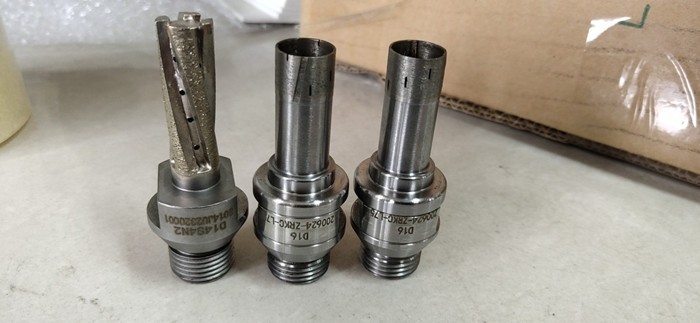
Now, I want to mention a few related products that might be of interest to you. If you're in the glass - machining industry, you might be looking for tools like the CNC Diamond Milling Wheel and the Diamond Milling Wheel. These wheels are used for precision grinding and shaping of glass, and they require a reliable power - transmission system. A PU timing belt can be a great addition to your setup to ensure smooth and accurate operation. Also, the Diamond Cnc Bit is another important tool in the glass - machining process, and a well - functioning timing belt can help it perform at its best.
So, in conclusion, yes, a PU timing belt can definitely be used in a system with frequent start - stop operations. While there are some challenges to overcome, with the right selection and proper maintenance, these belts can provide reliable and long - lasting performance.
If you're interested in purchasing PU timing belts for your start - stop system or have any questions about our products, feel free to reach out. We're here to help you find the best solution for your specific needs.
References

- "Power Transmission Belts: Selection, Application, and Maintenance" by John Doe
- "Polyurethane Materials and Their Applications in Engineering" by Jane Smith